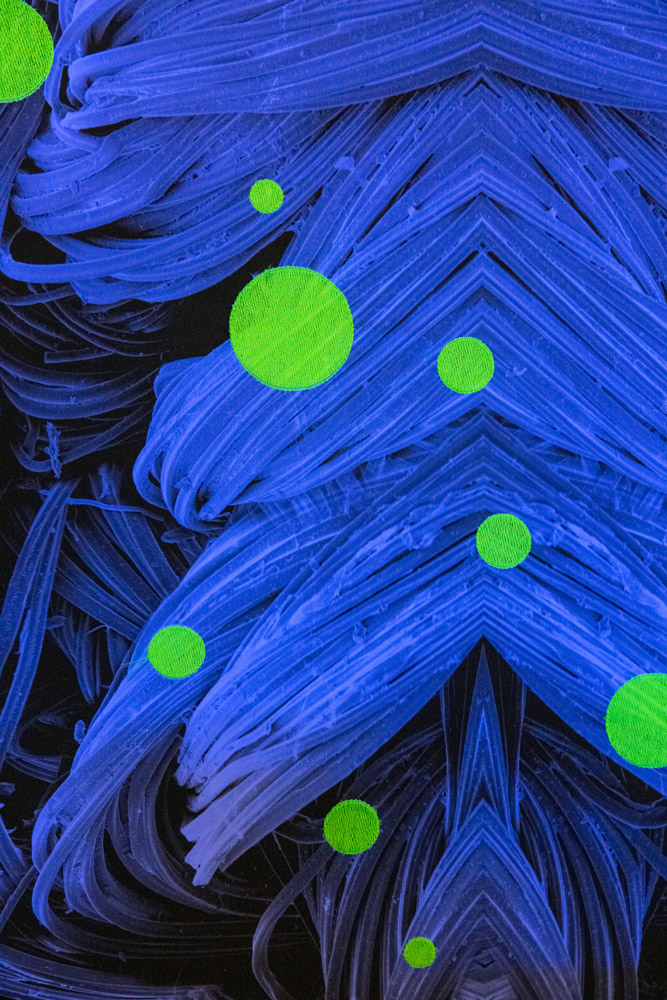
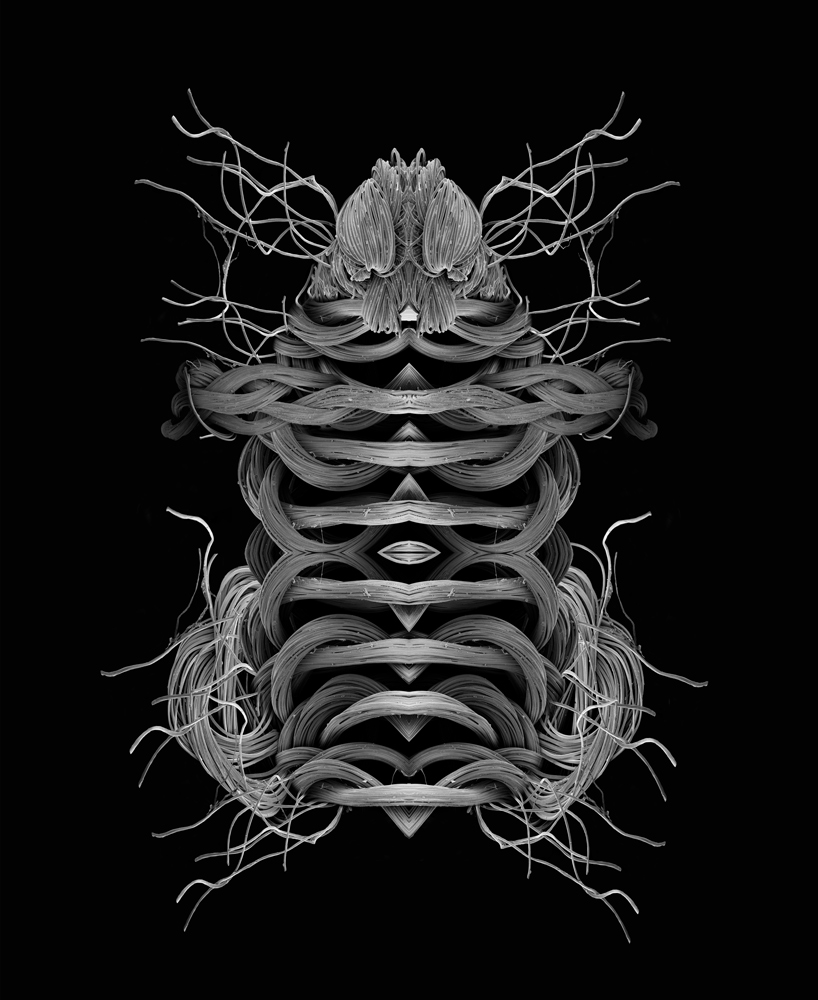
Unknown Creature V, 2026 | SEM images of embroidery samples © Dr. Julius Jeiter | photomontage
Unknown Creatures, 2026
At first glance, the bodies of the Unknown Creatures series appear organic and alive. A look closer, however, this perception proves deceptive. What seems like biological fibres or filament-like muscle tissue is in fact inanimate matter. The works are based on small embroidery samples made from polyester thread, which, in collaboration with the botanist Dr. Julius Jeiter, were magnified up to 600 times using a scanning electron microscope (SEM). The resulting visual worlds originate from a scientific method of analysis, yet here they are removed from their original context, with artistic intent assuming the role of an ostensibly scientific form of evidence.
Each unknown creature is composed of fragments from original SEM images. Through repetition, superimposition and mirroring of the microscopic structures, insect-like beings emerge that cannot be assigned to any known species. The works oscillate between scientific imaging and artistic construction, creating the impression of novel organisms that seemingly call for taxonomic investigation.
The works simulate the perspective of scientific research while simultaneously referencing its systems of classification. The neon-yellow embroidered circles function as visual markers, echoing the language of taxonomy. They recall classifications, highlights, or annotations in scientific illustrations and suggest a systematic order that ultimately remains unresolved.
Through the use of black light in the exhibition space, the neon-yellow colouring of the embroidery thread, as well as the unprinted white areas of the digital prints of the individual Unknown Creatures, are activated. This interaction with light creates an additional, almost mystical dimension to the work and conceptually evokes bioluminescence — the chemical process by which certain organisms, such as fireflies (Lampyridae), produce light independently. The artificially induced luminosity reinforces the impression of a living system and expands the tension between natural appearance and artistic staging.
The production of this work was generously supported by the Deutsches Textilmuseum Krefeld in Germany.
See Tissue samples, 2020 for more SEM images:
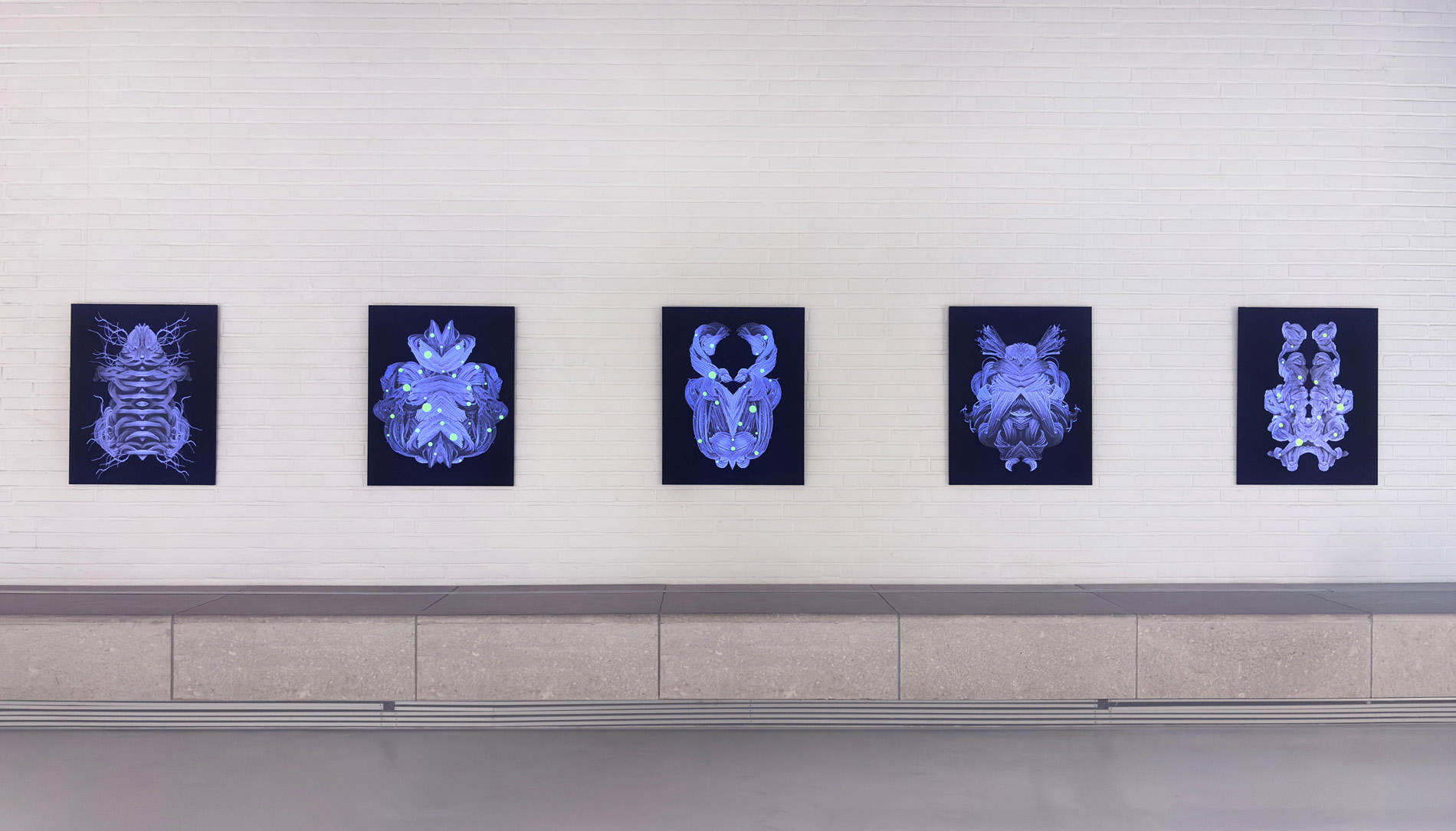
Exhibition view Sehnsucht Wald, 2026 | Deutsches Textilmuseum Krefeld, Germany | Unknown Creatures, 2026, SEM images of embroidery samples © Dr. Julius Jeiter; photomontage, digital print and acrylic on synthetic fabric, machine embroidery; black light
100 x 80 cm each one; 5 pieces in total
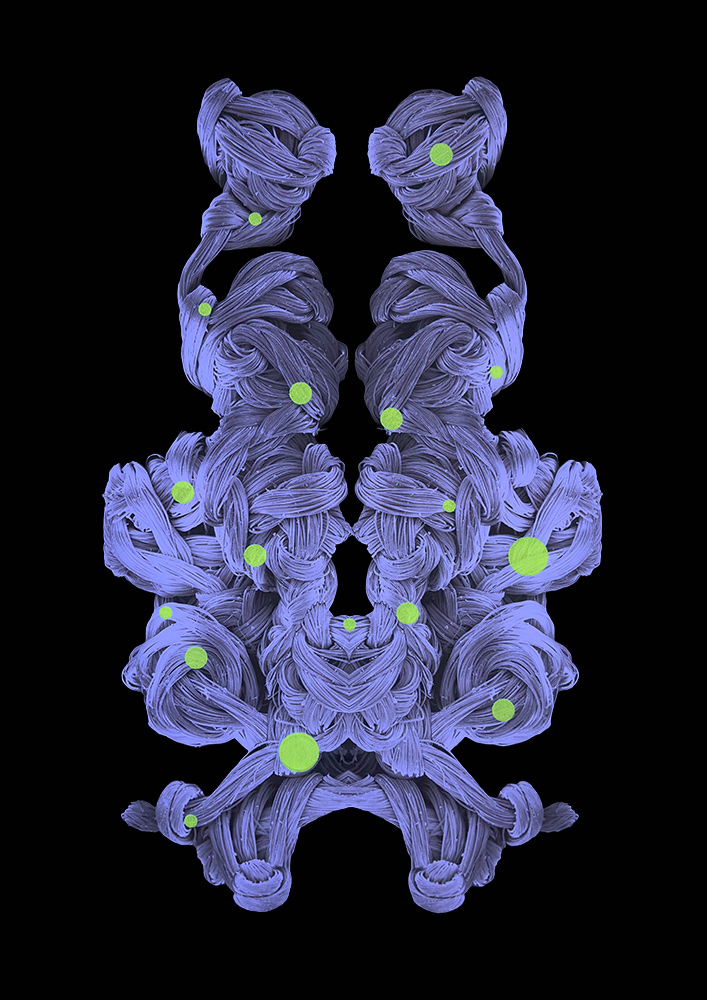
Unknown Creature I, 2026, SEM images of embroidery samples © Dr. Julius Jeiter; photomontage, digital print and acrylic on synthetic fabric, machine embroidery; black light
100 x 80 cm
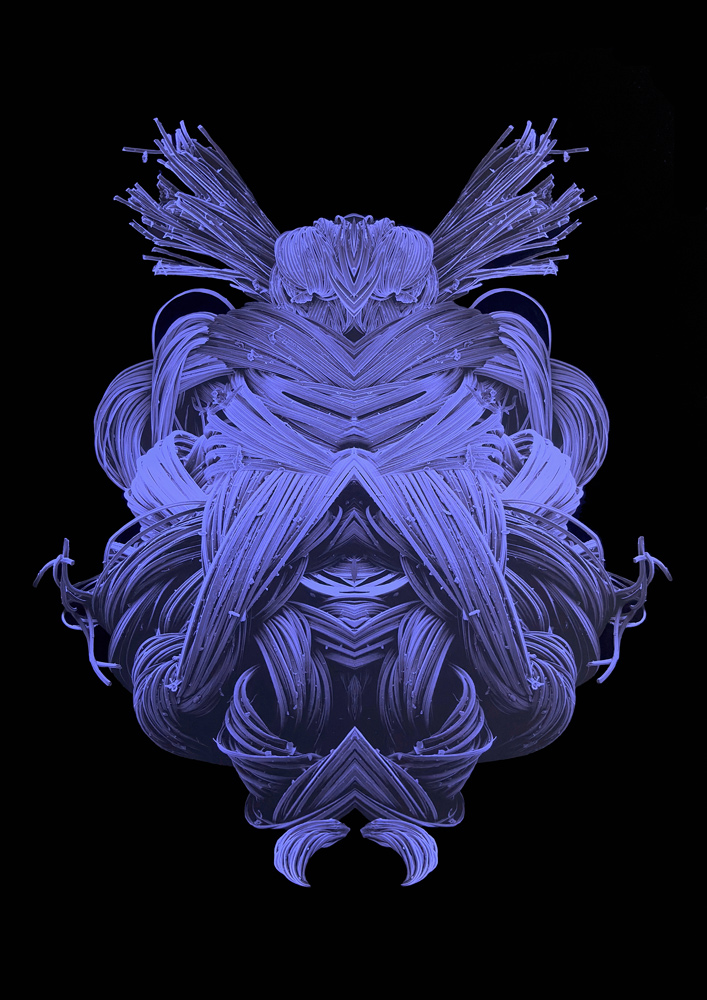
Unknown Creature II, 2026, SEM images of embroidery samples © Dr. Julius Jeiter; photomontage, digital print and acrylic on synthetic fabric, machine embroidery; black light
100 x 80 cm
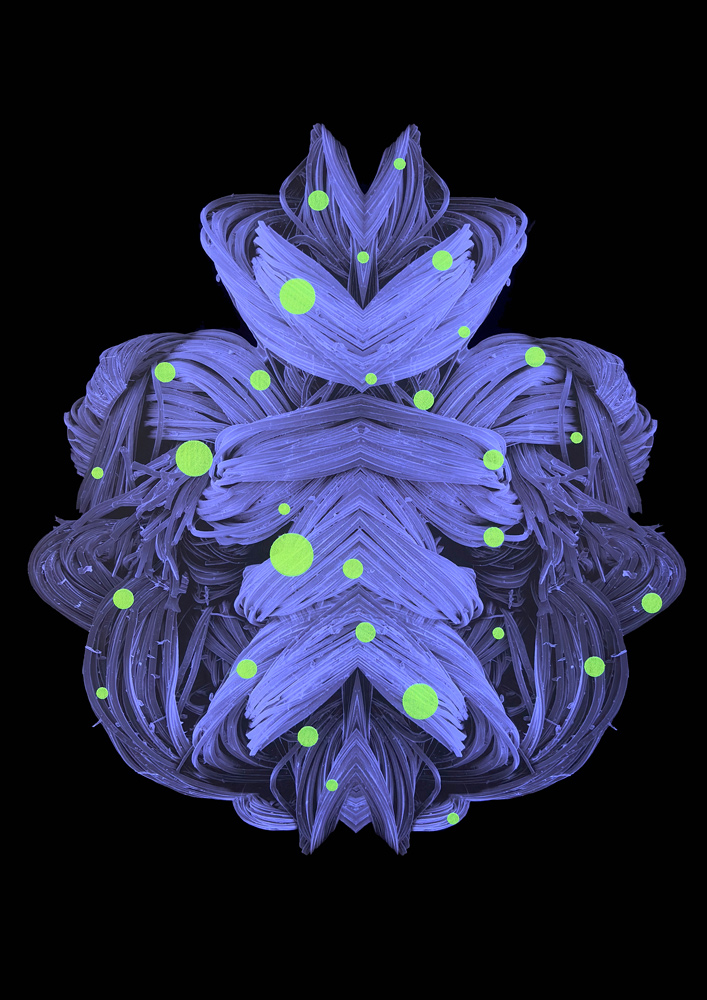
Unknown Creature IV, 2026, SEM images of embroidery samples © Dr. Julius Jeiter; photomontage, digital print and acrylic on synthetic fabric, machine embroidery; black light
100 x 80 cm
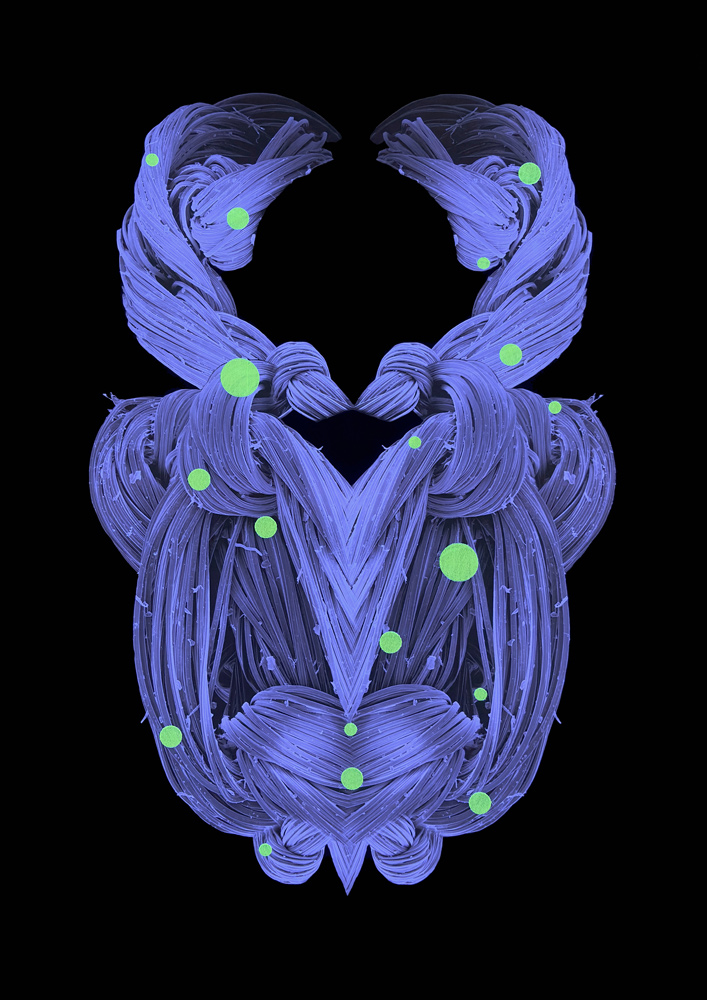
Unknown Creature III, 2026, SEM images of embroidery samples © Dr. Julius Jeiter; photomontage, digital print and acrylic on synthetic fabric, machine embroidery; black light
100 x 80 cm
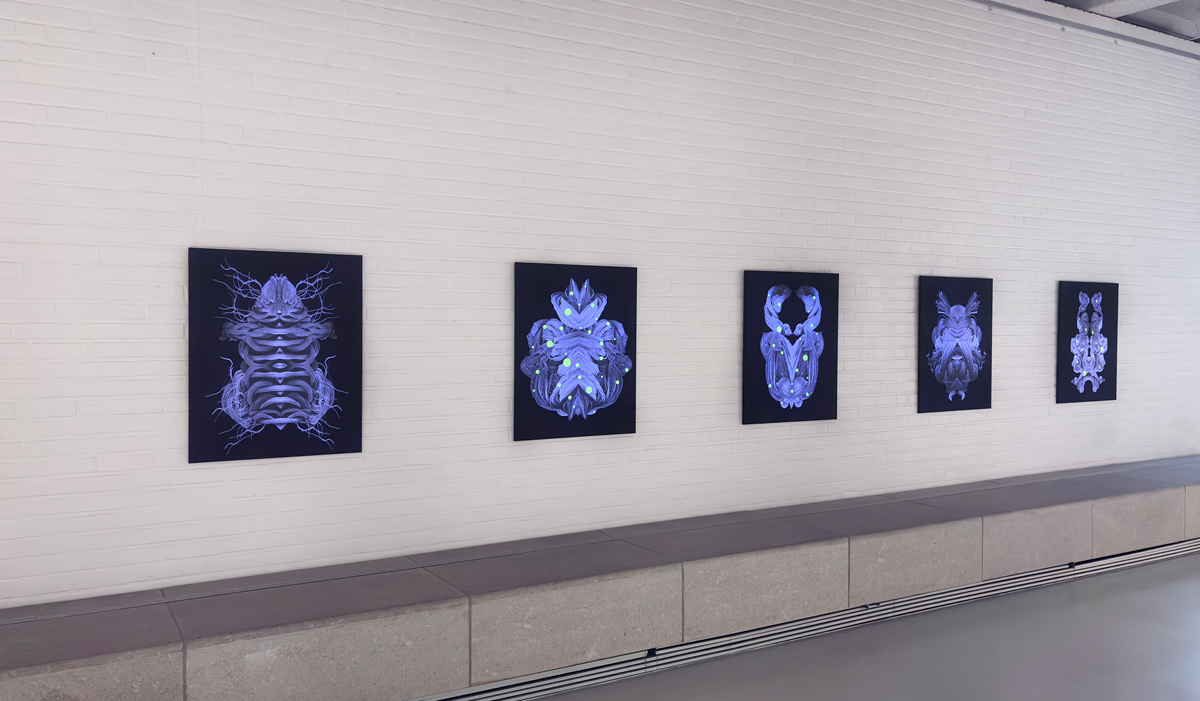
Exhibition view Sehnsucht Wald, 2026 | Deutsches Textilmuseum Krefeld, Germany | Unknown Creatures, 2026, SEM images of embroidery samples © Dr. Julius Jeiter; photomontage, digital print and acrylic on synthetic fabric, machine embroidery; black light
100 x 80 cm each one; 5 pieces in total
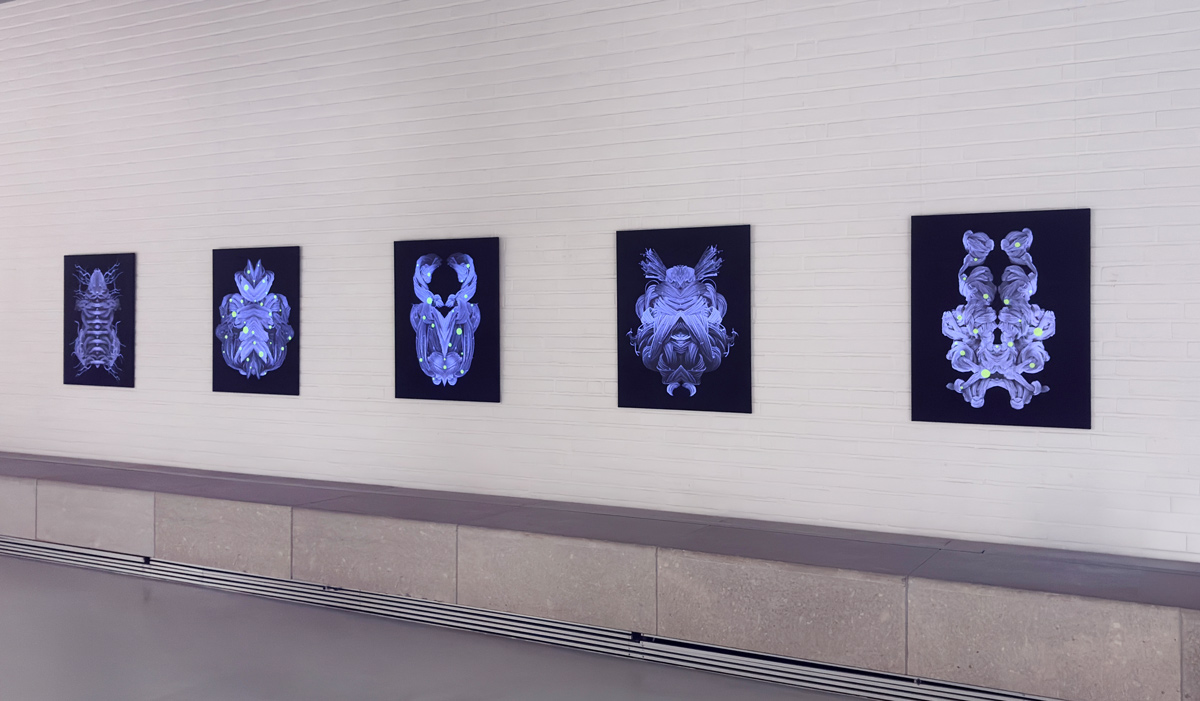
Exhibition view Sehnsucht Wald, 2026 | Deutsches Textilmuseum Krefeld, Germany | Unknown Creatures, 2026, SEM images of embroidery samples © Dr. Julius Jeiter; photomontage, digital print and acrylic on synthetic fabric, machine embroidery; black light
100 x 80 cm each one; 5 pieces in total
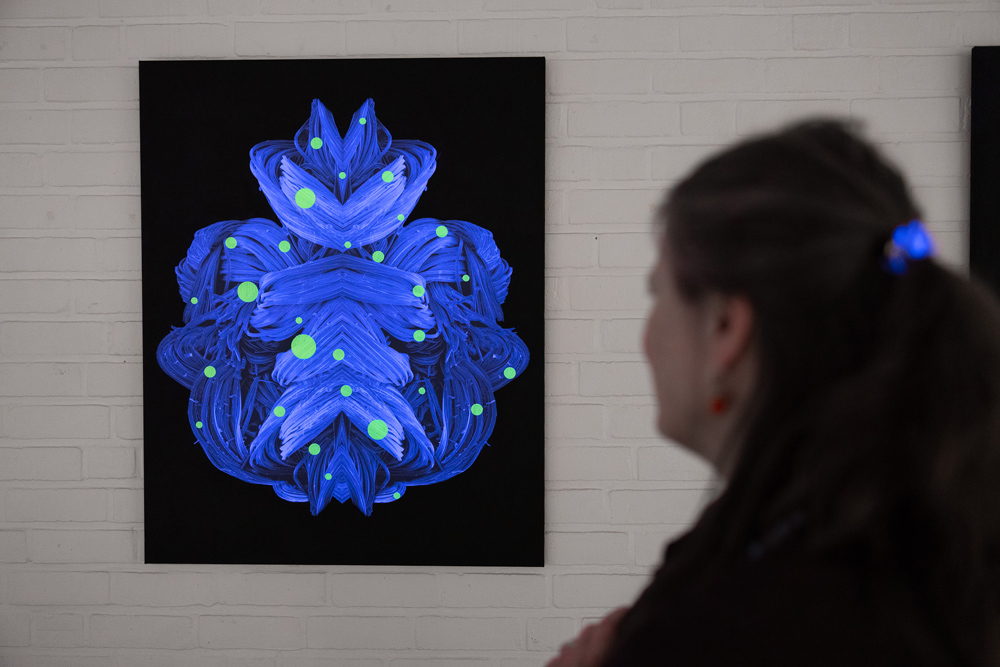
Exhibition view Unknown Creatures, 2026 | Photo: Felix Burandt
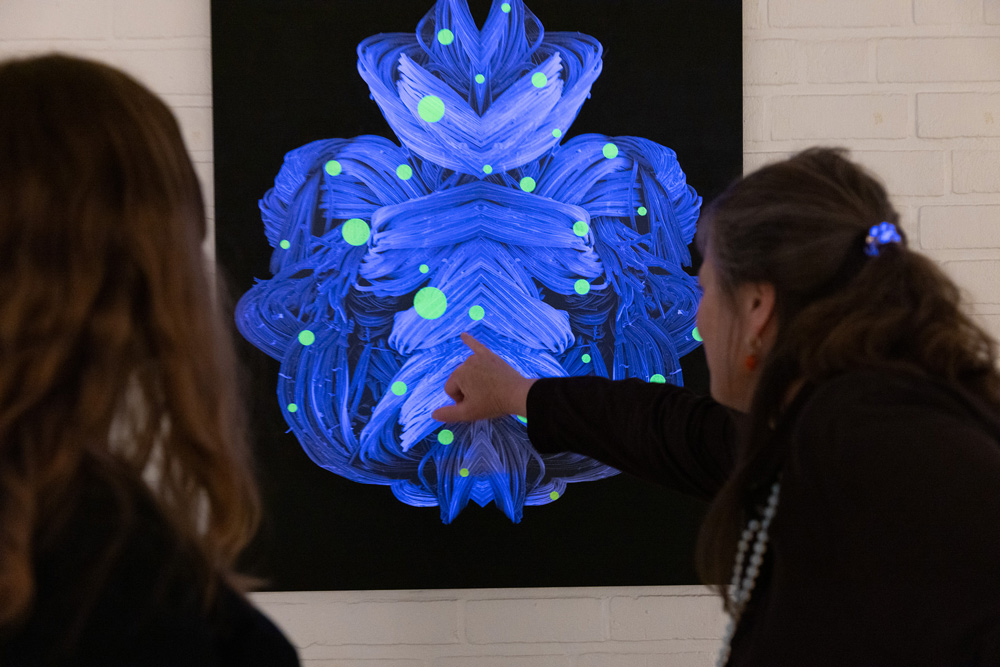
Exhibition view Unknown Creatures, 2026 | Photo: Felix Burandt